
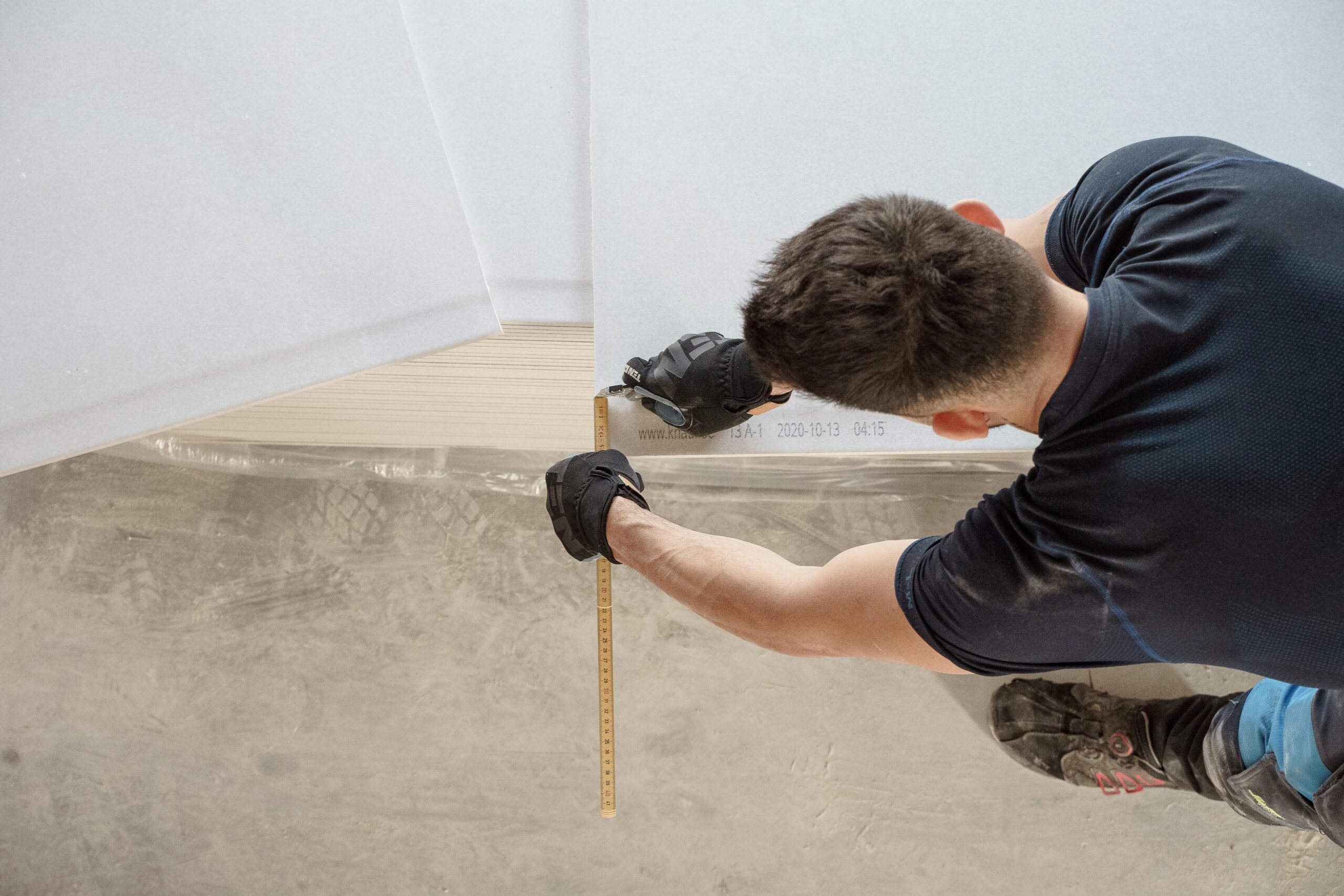
There is a common mistake people make when budgeting a drywall project. They spend a lot of time picking the right board and almost no time thinking about who is actually going to hang it.
That is backwards.
Walk into any big box store in Lancaster or York and you will find a decent selection of drywall panels. Standard half-inch, fire-rated, moisture-resistant. The product itself is not where jobs go wrong. What ruins a drywall project, almost every single time, is poor drywall installation.
The seam that shows through three coats of paint. The corner that cracks six months after move-in. The ceiling looks fine in the morning and terrible when the afternoon light hits it at an angle. None of that is a material problem. It is a workmanship problem.
What the Board Cannot Do for You
Drywall panels, across most major manufacturers, are remarkably consistent. The gypsum core is the gypsum core. The paper facing is standardized. Even fire-rated and moisture-resistant variants follow strict specifications.
According to the Gypsum Association, the long-term performance of any gypsum wall system depends primarily on installation technique, not on the panel brand. That includes fastener patterns, framing alignment, joint treatment, and compound application.
So when a homeowner near Harrisburg pays extra for a premium panel and still ends up with bubbled tape and shadowed seams, the board is not the culprit. Something in the installation broke down.
That is the conversation most salespeople are not having with you at the counter.
The Parts of Installation That Actually Determine the Outcome
It Starts Before the First Board Goes Up
Good installers check framing before they touch a panel. Bowed studs. Out-of-plumb walls. Inconsistent joist spacing on ceilings. These things will telegraph right through finished drywall and there is no amount of paint that covers them up.
In older neighborhoods across Lancaster City or the row homes near downtown York, framing from 80 or 100 years ago does not behave the same way as modern lumber. It has moved, dried, and settled for decades. A crew that does not account for that will hang flat boards against a surface that is anything but flat.
Fastening Is Not as Simple as It Sounds
Screw depth matters. Drive a fastener too shallow and it will create a visible bump. Drive it too deep and you break through the paper face, which kills the holding power of that fastener entirely.
When boards are fastened correctly, they stay tight through seasonal changes. And in South Central Pennsylvania, those changes are real. Summers are humid and heavy. Winters dry everything out. Wood framing expands and contracts, and if screws are not set right from the start, you will see the evidence of that movement as the years go by.
Finishing Levels Are a Real Thing, and They Matter
The industry uses a standardized system, Levels 1 through 5, to define how a completed drywall surface should look. Most people have never heard of it, but every quality drywall crew works within it.
Level 1 is the bare minimum. Level 5 is a full skim coat finish, required any time you are painting with high-gloss or dealing with strong directional lighting. Picking the wrong level for the space is its own kind of mistake. A Level 3 finish in a room that gets raking light from a big south-facing window is going to show every imperfection when the sun moves in the afternoon.
Matching the finish level to the application is judgment work. It does not happen automatically.
Mud Work and Drying Time
This is where patience separates good work from mediocre work. The joint compound has to dry, not just look dry. Applying another coat over one that has not fully cured causes the compound to shrink unevenly. That shrinkage shows up as ridging or cracking after the job is done and the painter has already finished.
Fall and winter installs in this area require extra attention. Cold job sites and high humidity significantly slow drying. A crew that ignores that and keeps pushing forward is setting the client up for a callback.
What Goes Wrong and Why
Most common drywall defects trace back to the same handful of causes:
- Screw pops: Fasteners set at the wrong depth, or framing that moved before the board was fully seated
- Cracked corners: Missing corner bead, or compound that was applied without proper tape backing
- Seam shadowing: Compound that was not feathered far enough from the joint, or sanded unevenly before painting
- Sagging ceiling panels: Inadequate fastening for the span, or panels that were too heavy for the framing spacing
None of these is a product failure. Every one of them is an installation failure.
Why This Region Has Its Own Set of Challenges
Drywall installation in Lancaster, Harrisburg, and York County is not the same as doing the same work somewhere with a different climate and housing stock.
The older housing in this area, particularly anything built before 1960, often has irregular framing, settled foundations, and mechanical systems that were added after the fact. Running new drywall through those conditions takes a different approach than a clean new build in a suburb outside York.
The weather adds another layer. Humid summers mean moisture management on job sites. Cold winters mean managing drying conditions carefully. A crew that has worked in this region for years understands these variables. One that is just moving through does not.
How to Actually Evaluate a Drywall Contractor
Before hiring anyone, ask them what finish level they plan to deliver, and watch how they answer. If they cannot explain the difference between a Level 4 and a Level 5 finish, that is information. Ask how they handle framing problems when they find them. Ask about how many coats of mud they apply and how long they let each one dry.
If you can, look at finished work in person rather than in photos. Photos can hide a lot. Standing in a room with good natural light will show you more in two minutes than a portfolio of pictures will.
The Elite Edge Drywall team works throughout Lancaster, Harrisburg, and York County on residential and commercial projects. Every job starts with an honest look at what the space actually requires, not a standard routine applied regardless of conditions.
The Budget Argument for Investing in Labor
When people try to cut costs on a drywall project, labor is usually the first place they look. That is the wrong call almost every time.
Standard drywall panels from a reliable manufacturer are not where money gets wasted. Correcting bad drywall installation after the fact, after the painter has come and gone and the defects are showing through the finish, is where projects become expensive. Rework costs more than getting it right the first time. That is true whether you are renovating a kitchen in Lancaster or fitting out a commercial office near Harrisburg.
Put the budget into the crew. The wall will still be there in twenty years. How it looks then depends almost entirely on how it was installed.
Ready to Get It Done Right?
If you have a drywall project coming up in Lancaster, Harrisburg, or York County, the most important decision you will make is who installs it. Not which board you buy.
Elite Edge Drywall handles residential and commercial drywall installation and repair throughout South Central Pennsylvania. We show up on time, keep job sites clean, and finish walls the way they are supposed to look. No shortcuts on drying time. No rushed mud work. No surprises at the end.
Call us at 717-799-8469 or visit eliteedgedrywall.com to get started. We are happy to walk through what your specific project needs before any work begins.
Frequently Asked Questions
What does professional drywall installation actually include?
It covers more than hanging boards. A full installation includes inspecting and correcting framing issues, cutting panels to fit the space, fastening at the correct depth and spacing, installing corner and edge bead, applying multiple coats of joint compound with proper drying time between each, sanding, and a final inspection before the painter arrives. Each of those steps affects the finished result.
How long does a drywall installation project take from start to finish?
It depends heavily on the size and complexity of the space. A single room can take two to four days when you account for compound drying time between coats. Larger projects, full basements, commercial spaces, or whole-home renovations can take several weeks. Any timeline that does not build in adequate drying time between coats is a timeline designed to cut corners.
What finish level should I ask for when getting drywall installed?
For most standard residential rooms painted with flat or eggshell paint, a Level 4 finish is appropriate. If you are using semi-gloss or high-gloss paint, or if the room gets strong directional light from windows, you need a Level 5 finish, which includes a full skim coat over the entire surface. A contractor who does not ask about your paint type or lighting conditions before quoting a finish level is not giving you the full picture.
Why do walls crack after drywall installation is finished?
Cracking after a job is done almost always points to something in the installation process. Compounds applied too thick in one coat, inadequate tape embedding at seams, rushing through drying stages, or framing movement caused by fasteners set at the wrong depth. In older homes across Lancaster and York counties, seasonal wood movement in aging framing can also contribute if the installation did not account for it.
Is moisture-resistant drywall necessary, or is it just an upsell?
In rooms with consistent humidity, such as bathrooms, basements, and laundry rooms, it is genuinely worth using. Standard drywall deteriorates when it remains damp over time. That said, moisture-resistant panels are not a fix for underlying moisture problems. If there is water intrusion or a vapor management issue, the board will still fail without those problems being addressed first.
How is drywall installation different in an older home versus new construction?
New construction provides installers with clean, accessible framing in consistent dimensions. Older homes, especially pre-1960 construction common throughout Lancaster and York, often exhibit uneven framing, prior repairs, and sometimes walls that are not plumb or flat. Installation in those spaces requires more prep work and more adjustment. A crew that treats every job the same regardless of the building’s age will deliver inconsistent results.
Can damaged drywall be repaired, or does it need to be replaced?
Many repairs are possible without replacing whole panels. Small holes, isolated cracks, and sections of failed tape can often be fixed with minimal disruption. Where water damage is involved, or where the damage is widespread, full panel replacement is usually the more practical path. A proper assessment of the damage before starting work tells you which direction makes more sense for the space.
About the Author
The Elite Edge Drywall Team | Elite Edge Drywall
Pennsylvania | Drywall Installation & Repair Specialists
The Elite Edge Drywall Team provides professional drywall installation and repair services throughout Pennsylvania, focusing on clean, precise workmanship for both residential and commercial spaces. With over 8 years of experience, the team is dedicated to delivering smooth, seamless finishes that blend naturally into each environment. Their work is centered on attention to detail, reliability, and maintaining high standards from start to finish.
Built on core values of craftsmanship, respect, and accountability, Elite Edge Drywall emphasizes clear communication and dependable service on every project. The team takes pride in treating every space with care, ensuring clean job sites, consistent timelines, and results that hold up over time. Their focus remains on delivering drywall work that is done properly, with minimal disruption and maximum quality.